
GIFF JOHNSON
There is often a disconnect between international donors and the potential recipients who need development aid which makes it impossible for funding to be delivered.
This can be for a variety of reasons, but often — particularly for small island nations such as RMI — the donors may have one set of priorities, but those seeking funds have development needs that don’t match. Or requirements are so onerous to satisfy that a small island agency, with a handful of staff and few resources simply cannot qualify for funding, no matter how serious the need.
Funding availability can be more of a mirage than a reality with some entities, particularly in the area of climate mitigation and adaptation funding.
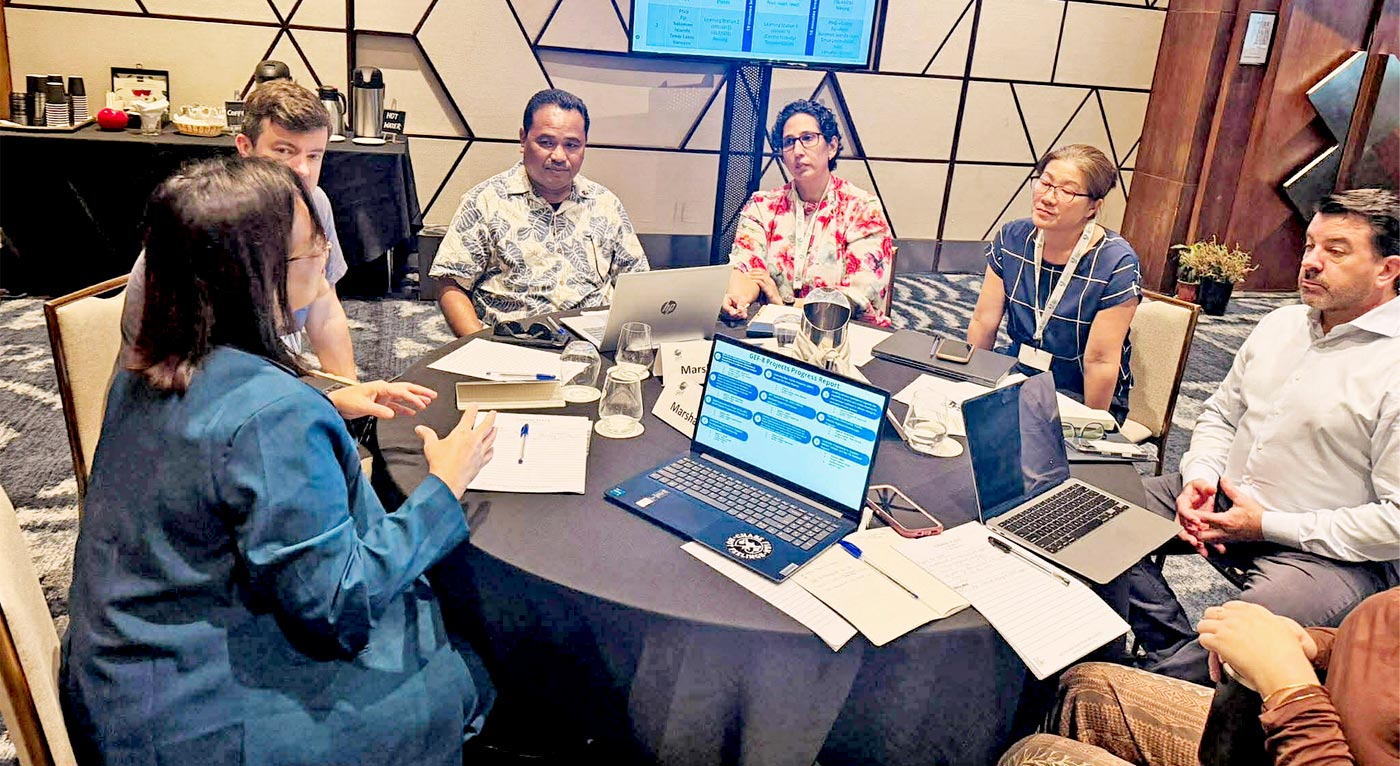
At the Global Environment Facility meeting in Fiji last month of the Pacific Regional Expanded Constituency, RMI EPA General Manager Moriana Phillip spoke pointedly about this problem.
“I was invited by the Global Environment Facility (GEF) to participate as a panelist at the GEF Constituency meeting recently in Fiji,” she said. “I jumped at the opportunity to share RMI’s experience in accessing GEF funds.”
She highlighted the challenges the Marshall Islands faces as a small island development state in accessing Global Environment Trust Funds. She asked, somewhat rhetorically: “But is this country priority GEF-able?”
“This,” she said, “is the first roadblock: This phrase means that if the activities the county is ‘prioritizing’ do not align with pre-determined ‘priorities’ under GEF, it would not matter that those activities presented are there because they are urgent in nature.” The response is a “no,” and the message the RMI receives is: GEF Trust Funds DO NOT fund climate adaptation activities.
Another major roadblock to accessing funding from the GEF is that adaptation challenges in atoll systems are interlinked and systematic — challenges are cross sectoral, which means that environmental protection and climate change adaptation cannot be separated, Phillip said.
“I called for greater flexibility for use of GEF Trust Funds and highlighted that addressing small island developing states-driven environmental protection priorities and adaptation investments will generate measurable global environmental co-benefits.”
She asked bluntly: Is the Global Environment Facility serious about aligning with small island developing states?
In the bilateral meetings that followed her remarks, “we had positive engagement from GEF’s Secretariat,” Phillip added.
The GEF plays a critical role in financing projects that address biodiversity loss, climate change mitigation and adaptation, chemical and waste pollution, and the degradation of land, forests, and international waters. It also directly supports the implementation of major global environmental agreements.
Attending the Global Environment Fund Meeting of the Pacific Regional Expanded Constituency in Nadi, Fiji along with Phillip were Secretary of Natural Resources and Commerce Ywao Elanzo, and RMI EPA staff Winifred Canney and Heggar Wilson.
[jetpack_subscription_form title=“Subscribe” subscribe_button=”Sign Me Up” show_subscribers_total=”1″]