
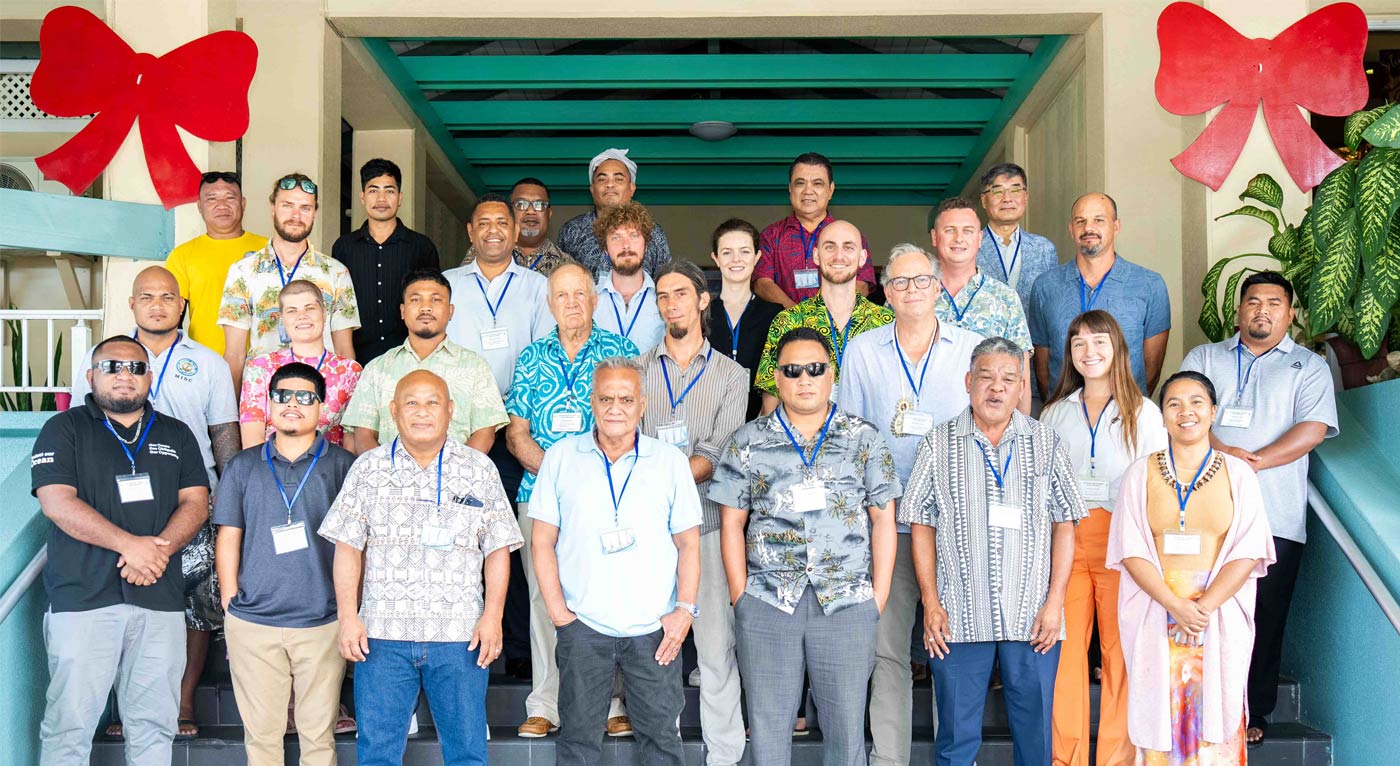
The RMI government together with the German-funded Low Carbon Sea Transport Project implemented by GIZ, successfully concluded a three-day regional workshop bringing together government institutions, vessel operators, technical experts, regional organizations, and international partners. The workshop marked an important milestone in advancing the RMI’s maritime decarbonization agenda and strengthening cooperation for the next phase of low-carbon shipping across the Pacific.
Hosted in Majuro from 2 to 4 December, the workshop examined progress made since the delivery of the SV Juren Ae, the RMI’s prototype wind-assisted cargo vessel, and had the participants map out next steps.
Participants reflected on operational lessons, training needs, data systems, and opportunities for upscaling. The program included a sail on the low- carbon vessel, technical sessions, regional exchanges, and strategy discussions, all aimed at aligning work in this area at the national and regional levels on the pathway to low-carbon sea transport.
Opening the workshop, Transportation Secretary Phil Philippo emphasized on behalf of Minister Hilton T. Kendall that the Juren Ae has already demonstrated the viability of clean maritime solutions and the leadership role that small island nations can play. He called upon partners to design the next project phase collaboratively, building on lessons learned and strengthening shared ownership.
Low Carbon Sea Transport Project Director Raffael Held highlighted the significance of reconnecting stakeholders after the vessel’s first operational year, stressing the need for coordinated action to shape the project’s upcoming phase.
“This is the moment to clarify where we stand, where we want to go, and how we can move forward together,” he noted.
During the workshop, participants discussed the RMI’s national commitments — including the target of reducing domestic maritime emissions by 40 percent by 2030 and achieving full decarbonization by 2050 — as well as regional efforts such as the Pacific Blue Shipping Partnership and preparations for a multi-country demonstration fleet of low-carbon vessels.
In his closing remarks, Acting Minister Bremity Lakjohn reaffirmed the RMI government’s full support for the directi on emerging from the workshop. He underscored the urgency of maritime decarbonization in the face of growing climate impacts and emphasized that the momentum built in Majuro should guide the next years of implementation.
The workshop concluded with a strong commitment to expand cooperation, strengthen training and maintenance systems, improve vessel design, and secure funding pathways for the Pacific’s maritime transition. As the Low Carbon Sea Transport Project enters its next phase, partners agreed that sustained regional collaboration will be essential to delivering a safer, cleaner, and more resilient future for Pacific shipping.
[jetpack_subscription_form title=“Subscribe” subscribe_button=”Sign Me Up” show_subscribers_total=”1″]