
KAREN EARNSHAW
Last month the sailing-cargo vessel Juren Ae took a Ministry of Health and Human Services team to 17 atolls and one island as part of a 12-month pilot program called the Performance Improvement Initiative. The initiative is a major outcome of a 2023 summit between the Marshall Islands Mayors Association and MOHHS.
Implementation of the program began in October last year, with a similar voyage around the country on the MOHHS motor vessel Liwatoon Mour. Team leader Lincoln Simeon, a nurse practitioner, said that this trip’s goal was to do initial performance assessments at each location, which would then be used as a starting point to measure improvement.
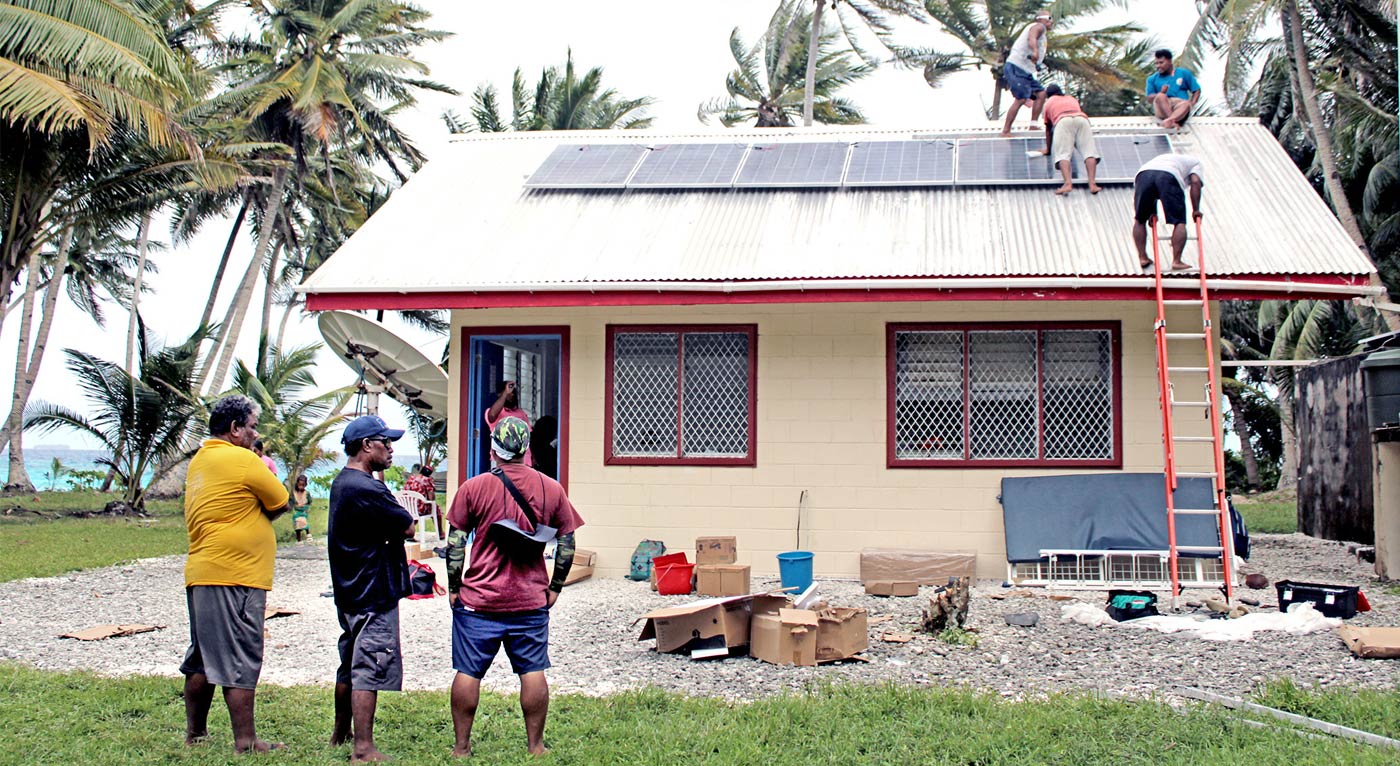
The assessments covered everything from essential supplies at each health clinic, the level of communication between the health assistants and members of the local government, available facilities such as solar systems, Starlink internet installations, hospital beds, and data gathering. At each stop, lists of needed equipment were made and guidelines provided to the health assistants and council members on how to improve health services to the residents.
In contrast, February’s trip saw the delivery of many of the much-needed supplies and equipment to each location. For example, in Woja, Ailinglaplap, the health assistant Weston Elji received supplies such as medicines and bandages and diabetics testing equipment. “Goals had been set on making sure patients’ issues were documented,” Lincoln said. “Everyone has a log in the registry books.”
As was typical, the medical team – which included dental specialists – arrived in Woja at about 9am and left at 5pm. “We also asked about any problems. For example, in Woja there was a small child who was having problems with his vision. He had to sit in the front seat in class to be able to see the blackboard.” Arrangements were made to bring the child to Majuro to coincide with a visit by Australian eye specialists.
Lincoln’s team included MOHHS staff and consultants Ishael Ken, Loraini Ranadi, Dr. Mark Durand, and Uraia Rogotava of UNICEF. Together they produced a Powerpoint show, with one of the first slides with data that shows clearly the need for “raising the standards and performance of Neighboring Islands Health Centers is critical for achieving health equity in the RMI.”
These “Monitoring, Evaluation, and Support Visits” resulted in a performance score sheet. Top of the list for the most improvement was Namu, which achieved its target of 85 percent with the help of health officer Oktan Timothy and Mayor Kemilang Kabua. The team told the Journal that “Back in October, only three out of 18 places showed any improvement on previous research. But this time 14 out of 18 showed they had improved, with the key being that they were consistent.”
On arriving at a village, the standard of the surroundings often reflected the results. Lincoln said “You can tell the ‘personality’ through the surroundings. If it is neat and tidy, then you can tell (their score will be better).” Ishael agreed, saying that these places also have better communication between the council and the assistants. “Some have a real partnership with more communication. They meet together once a month.”
The next trip for the MOHHS team is scheduled for May.
[jetpack_subscription_form title=“Subscribe” subscribe_button=”Sign Me Up” show_subscribers_total=”1″]